Tuesday, October 17, 2023

The Importance of Warmth by Belinda Kenwood


The Importance of Warmth

How to Dress Children for Cold Weather Success

By Miss Belinda


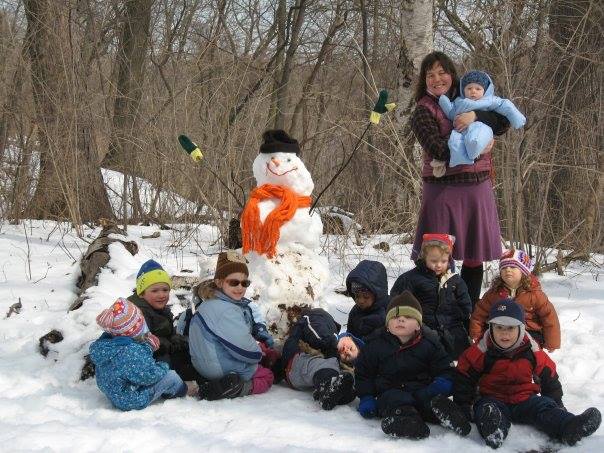
This past Friday, when playing outdoors at morning drop-off and after morning snack, we found the temperature to be the coolest we’ve experienced for several months.  Plus, the coolness was exacerbated by a breezy north wind.  Many of the children were woefully underdressed for the weather conditions. We were able to scrounge up some extra outerwear and accommodate those, though not all, who needed extra warmth, and it served as a good reminder that it was time to send out our annual information and requests regarding dressing your child/children for the cold months.

Because we spend a lot of time outdoors in all seasons and in all types of weather, it is imperative that the children be dressed appropriately. Now that we have entered the cooler/cold months, just by observing the children’s behavior, we can tell who is dressed warmly enough and who is not. Children who are appropriately dressed are able to tolerate the cooler/cold weather for longer periods of time. They are actively playing and enjoying themselves for the entire time we’re outdoors (between 45-minutes and 1.5 hours depending on the temperature including wind chill). Those who are not dressed warmly enough will stop playing and go stand next to their caregiver and may begin to cry and/or indicate that they are cold and want to go indoors.  They are miserable and uncomfortable – and that’s within the first 15-20 minutes.


A Child Development Perspective:


The importance of physical warmth cannot be overstated. From infancy until around the ages of 9 – 12 yrs., children are learning what hot, warm, cool, cold feel like within their bodies, meaning they have not yet developed awareness of temperature regulation within their bodies. We cannot explicitly teach the children to develop awareness of their body temperatures as this is a sense that grows in consciousness over time from within the child.  Thus, the adults have to be conscious of warmth for them – until they’ve gained enough awareness to do this for themselves. One of our tasks as parents and caregivers is to be a guardian of your child’s warmth – to ensure the health-giving properties of warmth for the young child.


*For example; When a child is cold, they use their energy to keep their temperature up potentially at the expense of growing.  When a child is cold and wet, they are also more susceptible to illness as there is less available energy to fight off viruses.  Speaking to the point of young children having not yet developed awareness of temperature regulation within their bodies - by the time they are able to indicate to us, either by behavior and/or by verbalizing it, they have become too cold and will have a difficult time warming up. 


So – What does it mean to be “A Guardian of Your Child’s Warmth?”


Dress them in layers:


  • 3 layers on top - Consisting of:
      • A Base-Layer = The first layer that lays next to the skin and helps the body retain heat/traps the heat in – think long-johns
      • A Mid-Layer = A long-sleeved top
      • An Outer-Layer = A sweater, sweatshirt, fleece or fleece vest over the mid-layer
      •  
  • 3-layers on the bottom – Consisting of:
      • A Base-Layer = Leggings or long-johns
      • A Mid-Layer = Loose pants i.e., sweat pants or something similar
      • An Outer-Layer = A pair of warm, waterproof snowpants – or snowsuit


*Note: Regarding Base-Layers – Material consisting of wool, wool/silk blend, or cotton blends work very well to retain heat. 


*Note: Regarding pants - Elastic waist bands work best as they are easier for children to take on and off themselves.  Pants with zippers/snaps/buttons are difficult for young children to manipulate which also makes it challenging for those children who use the toilet.


*Preferably No Jeans – Jeans provide very little, if any, warmth and generally come too tight and/or with zippers/snaps/buttons, all of which can also make it difficult for those children who use the toilet.


Outer Layers Consisting of:


1.      A warm, waterproof jacket or snowsuit


2.     A pair of warm, waterproof snowpants or snowsuit


·       Re Jackets, Snowpants and Snowsuits: Please make sure they are big enough to accommodate layering underneath – A good rule of thumb is to size up one size – this will allow enough room to accommodate extra layers as well as create an air pocket around the body for warmth.  If jackets/coats/snowsuits fit too snugly, the body will get colder more quickly.


3.     Warm waterproof bootsA good rule of thumb regarding boots is to get them one to 2 sizes bigger than their shoe size…in order to accommodate thick socks (wool or similar) and to create an air pocket around the foot for warmth.  Just as in the case of snug fitting jackets/snowsuits, if boots fit too snugly the foot will get colder more quickly.


4.     Warm Mittens *(Gloves not recommended for young children) – Hands stay warmer in mittens as the fingers keep each other warm.  Also – young children can experience difficulty with trying to fit each individual finger and thumb into their respective places on a glove.


  • Mitten Suggestion: For infants through young 3’s, try using a child-size pair of warm wool socks.  I call them “sock mittens,” and they work very well for the young child.  They allow for warmth as well as the flexibility children crave to use their fingers and thumb when manipulating play items. 


5.     Warm Hat that covers the ears – The ears and head let out a considerable amount of heat, and cold winds can really nip at children’s tender ears.


6.     Warm scarf/Neck gator – Wool or wool-silk blend, if at all possible, but something to protect their tender back and front of neck as well as chest area.


*Remember:  If the child gets warm, we can always take off layers. Better to be warm and adjust than to be cold and unprepared.


*Also - You don’t have to spend a fortune on these items…some of the best winter gear available can be found at thrift shops, ebay, etc.


*Our goal as caregivers is to provide children with moments of self-awareness and language with which to express their inner condition.  We can do this by:


Checking in with them:


  • Feel their hands – If a child complains that they are too hot and is asking if they can take off some layers/clothes, feel their hands first.  If they are cool or cold to the touch, it means their body is struggling to keep itself warm and they need to be dressed more warmly – so, keep the layers on until their tender hands warm up.  According to an EMT, cold hands is one of the first signs of shock.


  • Feel the back of their neck – Is it cold? Warm? Really warm? (this could indicate a fever)


In summary:


With your integral help in dressing your children in layers and providing both waterproof and warm outer gear, we will be able to help the children regulate their temperature both inside and outside.


*Please keep providing a back-pack or canvas tote, etc. to bring the above outdoor items from home to LifeWays and from LifeWays to home each day.  It is invaluable for the children as well as we caregivers when we have the proper clothing easily at hand for each child on a daily basis.


Blessing by Emily Bertran


From the Violet Garden

by Miss Emily


Below is a blessing we use in the Violet Garden to transition from inside the suite to the lunch table each day. This blessing celebrates the cycle of planting the seeds, the growth that shortly comes after and harvest collected to make our food. With an arching melody suggesting the limitless bounty of the world, this simple song welcomes gratitude to our lunch table each day.

Before the bread, the flour, the mill,

Before the mill the grain,

Before the grain, the sun, earth, and rain,

The beauty of our lives.


LifeWays' Festival of Courage Celebration by Miss Scarlett and Miss Emily

 LifeWays’ Festival of Courage Celebration

By Miss Scarlett and Miss Emily


Throughout the year, we celebrate festivals to connect us with the seasonal cycles of nature, establish a yearly rhythm for the children, and to strengthen our community. The Festival of Courage, also called Michaelmas, is the first festival of our school year. Falling near the autumn equinox, it marks the end of the summertime and the harvest season. Although the weather still tends to be warm in our region of the world, the seasons will soon begin to shift, and the days will grow ever-shorter. This shift marks a time of turning inward, a time of gathering strength to face the deepening darkness.

Here at LifeWays, our festival day began with the hand-dyeing of our vibrant yellow capes. A few days before our Festival of Courage celebration, Ms. Jane had each of the children place their cape into the yellow dye and give it a stir. Once everyone had a chance to dip their capes in the yellow, we rinsed them out, and brought them outdoors to dry in the light of the sun and autumn breeze. 

On Thursday, September 29th, the day of our festival, the celebration began with a wonderful story from Ms. Jaimmie. As the children gathered around to listen, the play rug was transformed into a magical land where the adventures of a fiery dragon and a princess took place. Once the tale had been told, we spoke a verse while we placed the yellow capes on each of the children:

Brave and true, I will be. 

Each good deed sets me free. 

Each kind word makes me strong. 

I will fight for what’s right. 

I will conquer the wrong.

After each child had received their cape, each suite began to form their dragon bread.  Working together, we pulled, kneaded, and shaped the dough into almighty dragons. Each dragon was unique, with walnut spikes along its back and raisins for eyes. Once the finishing touches were added, our dragon loaves were baked. We enjoyed them with our chili at lunch later in the day.  

For the rest of the afternoon, the tale of the princess and the dragon lived on in the children’s conversations, stories, and play. 


Sunday, January 22, 2023

KinderForest By Jason Boose

KinderForest
By Mister Jason

Every time we teach a child something, we keep him from inventing it.
- Jean Piaget


As a former librarian, I like order, learning facts, and knowing things. I used to work in tall glass buildings, teaching others the ‘right way.’ As an observer of my own children, I came to understand a basic principle of teaching that has nothing to do with being correct. And after working with young children for some time now, I know that teaching is about standardizing the world and creating efficient ways to measure our knowledge. I love teaching and teachers. But KinderForest is not about teaching. What we do in the woods is inventing. We are experiencing. We are painting the primer for all the colors of the world.

Explaining the ‘right way’ has limited value in early childhood. Safety, hygiene, and basic manners come to mind as areas where teaching is helpful. Unfortunately, much of early childhood is filled with activities that have a right and wrong answer, homogenize a child’s process, and measure their success in ways that limit children before they even begin experimenting. Schools are designed to have an efficient system and create measurable results. What we do in KinderForest isn’t measured, and most of the time, we don’t use the most efficient methods. This is all part of the plan to foster invention in a child’s mind.

We begin each day with attire to meet the whims of the weather. We strive to spend as much time outdoors as possible every KinderForest day, rain or shine or snow. Once we make our way outside, we have morning snack, songs, a story, and then we take a meandering walk through the woods to a play spot where the children can invent. The best days at KinderForest are those where the children feel free to create their day. Sometimes they choose to explore a mud flow next to the bog-log bridge, or see how close they can get to the nesting pairs of mallard ducks along the the riverbank, or discover the perfect stick for making a swooshing sound through the air, and find strength inside themselves as they make the walk back up from the river for lunchtime. At the end of each morning session, we do the mud dance, where I hum off-key jig to knock some of the mud off our boots. Then as we return indoors, we guess what might be for lunch with our noses. There’s not much ‘teaching’ in KinderForest but these children sure learn a lot about the world.


Childhood is a Slow Food Process By Jane Danner

Childhood is a Slow Food Process
By Miss Jane

A wise man on the bus once said, “Enjoy this!” and he gestured towards the crabby toddler on my hip, the diaper bag slung over my shoulder. And there was even a nod towards my bulging pregnant belly. I smiled at him as if he were mad but he continued with the words I shall never forget, “The days are long but the years are short. It is over before you know it!” And then he gave me an encouraging little pat on my arm and was gone.


Those days were indeed long. There were endless sleepless nights with fevers and coughs and night terrors and growing pains and ear aches. Rummaging through the medicine cabinet at 2:00 in the morning looking for something to alleviate the current discomfort, when mostly what they needed was a warm calm presence nearby to reassure. The days were filled with changing diapers and laundry and snacks and days at the beach and evenings at the park and a house full of toys and play and a feeling that time had stopped for me but was rushing past me in the real world. It was a long slow process as the children learned to roll over and sit up and walk and then talk and talk and talk. 


And it all sped up just a little bit when they started school. Suddenly, the picture books were gone and they were reading to themselves. I was helping them learn their letters and numbers and then suddenly, I wasn’t as they speed past me to learning stuff all on their own. I wasn’t taking them to the park anymore or the beach, they were taking me, as designated driver, to swim meets and soccer games and horseback riding and just as suddenly they didn’t need me for that either, just the keys to the car and they were taking themselves. And life was a little bit faster. And then suddenly I was dropping them off to college and showing up to their graduation. And life was suddenly a little bit faster. And now I am at this place, waiting in the middle of the night to hear about the birth of my next grandson, still a mom but at a respectful distance and indeed as it begins again, it was over before I knew it. And suddenly the world has slowed down again. And I am not quite sure when that happened either.


The point? This time at LifeWays is the slowest time of childhood, a truly magical time. A time to be savored. School days are coming fast and furious but for now let the children play. Enjoy! It is over before you know it.


Thoughts on Rest by Belinda Kenwood

Thoughts on Rest
By Miss Belinda

HAPPY NEW YEAR, Dear Families ~

I’d like to start off by sharing some wise words from Margaret Wise Brown, an American writer of children’s books that include classics such as Good Night Moon (published in 1947), Big Red Barn (published in 1956), and the Runaway Bunny (published in 1942), among many others.  *(Personal Note: If you do not yet have these three books at home, I encourage you to either purchase them or borrow them from friends, relatives or the library.  They make for wonderful bedtime stories as they are simple, calming, include lovely illustrations and can be read over and over again.)


“In this modern world where activity is stressed almost to the point of mania, quietness as a childhood need is too often overlooked.  Yet a child’s need for quietness is the same today as it has always been ~ it may be even greater ~ for quietness is an essential part of all awareness.  In quiet times and in sleepy times, a child can dwell in thoughts of his (her) own, and in songs and stories of his (her) own.”

After discovering Margaret’s quote, I found that she has articulated beautifully the reason why I love nap/rest time at LifeWays.  It is the one time in our day where both child and caregiver can experience the essential need and beauty of quietness.  After lunch (and after all of our morning indoor and outdoor activities), as we start settling into our beds (cots) and prepare for a story, a hush falls over the room.  As I begin reading or telling the story, the children finish settling their bodies, lying on their backs, heads on pillows, tuning in to the story.  As I continue to read, I observe some of the younger children drifting off to sleep while several of the older children continue listening to the story.  

When the story is finished, I begin quietly singing a lullaby or two as I turn off the lamp light, and the quietness envelops the room.  Some children begin singing quietly to themselves, while others simply gaze out the window through the small spaces the curtain does not cover.  Some lie quietly in the darkness for a while before drifting off to sleep.  And for two precious hours, the children and I experience the peace and tranquility of quietness, a time where we “can dwell in thoughts of our own, and in songs and stories of our own” ~ restorative for body, mind and soul…and in that quiet space, where the body is relaxed and the mind can now wander because it does not have to focus on the task at hand, is where creativity lies.